What is IGCSE? A parent's guide to the International GCSE
Everything Malaysian parents ask about the International General Certificate of Secondary Education — in plain language.
What does IGCSE stand for?
IGCSE stands for International General Certificate of Secondary Education. It was developed by Cambridge International Examinations (previously University of Cambridge International Examinations, CIE) in 1988 as an international version of the UK GCSE. The University of Cambridge has run examinations since 1858.
Today the qualification is offered by several examination boards — Cambridge Assessment International Education (Cambridge IGCSE), Pearson Edexcel and OxfordAQA (both called International GCSE). When parents say "IGCSE", they usually mean this end-of-secondary certificate, whichever board awards it.
What age do students take IGCSE?
IGCSE is usually a two-year course in Year 10 and Year 11 (around ages 14–16), with examinations at the end of Year 11. Most schools prepare students with a lower secondary programme first. At Harvest Academy Malaysia, students follow the Lower Secondary syllabus in Years 7–9 and the International GCSE in Years 10–11.
How is IGCSE graded?
- Cambridge IGCSE is graded A* (highest) to G. Some subjects have a Core tier (grades C–G) and an Extended tier (grades A*–C).
- Pearson Edexcel and OxfordAQA International GCSEs are graded 9 (highest) to 1.
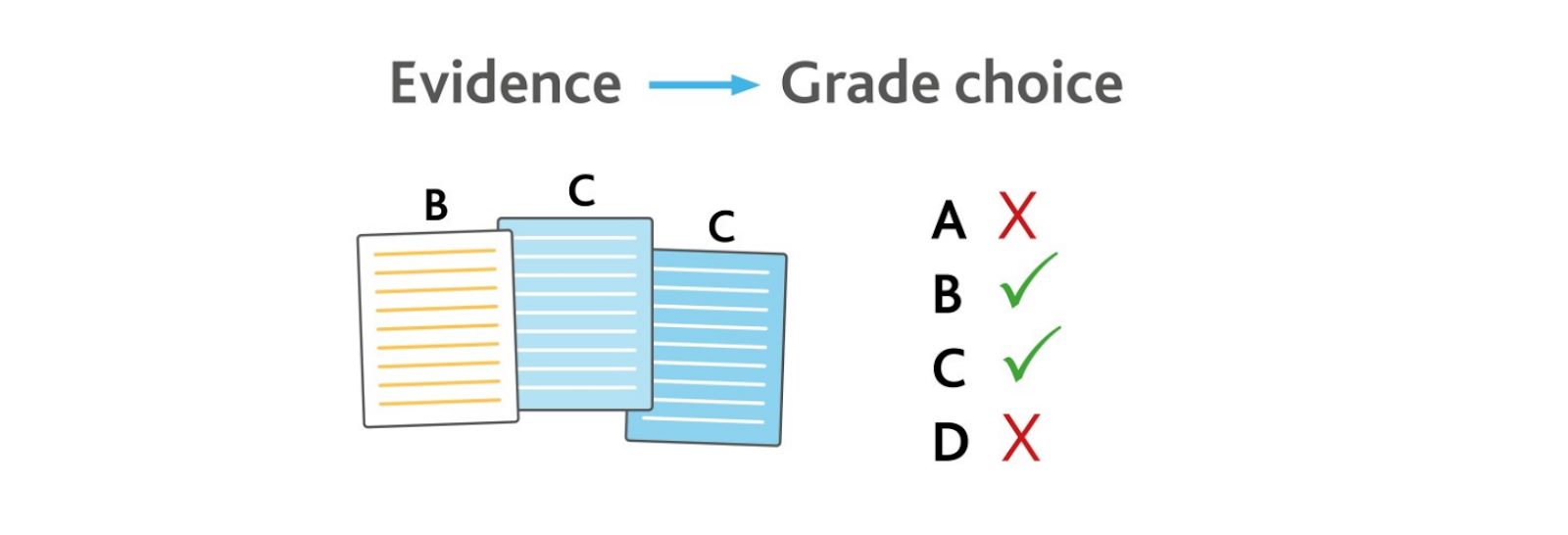
- Grades are set using grade boundaries, so students are not penalised if a paper is harder than the previous year's. How IGCSE exams are marked →
Is IGCSE harder than SPM?
They are different rather than simply harder or easier. IGCSE is taught and examined in English, focuses on application, enquiry and problem-solving, and lets students choose subjects that match their strengths. IGCSE curricula are often considered closer to the old O Level than to the UK GCSE, and the examinations are regarded as rigorous.
| IGCSE / International GCSE | SPM | |
|---|---|---|
| Stage | End of secondary (Year 11, ~age 16) | End of secondary (Form 5, ~age 17) |
| Language | English | Mainly Bahasa Melayu (with some subjects in English) |
| Recognition | International — universities and employers worldwide | Malaysia |
| Next step | A Level, foundation, diploma or pre-university, in Malaysia or overseas | STPM, matriculation, A Level, foundation or diploma |
Is IGCSE recognised by universities?
Yes. In the UK, Cambridge IGCSE is accepted as equivalent to the GCSE, and many UK universities consider IGCSE grades together with predicted A Level grades. Many universities worldwide look for a combination of IGCSEs and A Levels (or a foundation programme); some US and Canadian colleges accept learners with five Cambridge IGCSEs at grade C or above. Private universities in Malaysia also welcome IGCSE leavers into foundation and pre-university programmes.
IGCSE in Perlis, Kedah and Langkawi
Harvest Academy Malaysia in Kangar is the first and only International GCSE Prep School in Perlis. Over five years, students build the subject knowledge and English needed for the International GCSE, and sit the official Cambridge IGCSE examinations at the end of Year 11. Harvest students have achieved a 100% pass rate every year since 2021, including 100% A* or A grades in 2025 — and graduates have gone on to universities such as the University of Nottingham, Monash University and Taylor's University with scholarships.
Families from Alor Setar, Jitra and Langkawi can choose our weekday or full boarding. See the subjects and pathway →
Frequently asked questions
What is the difference between IGCSE and International GCSE?
They refer to the same level of qualification. "Cambridge IGCSE" is Cambridge's name for it; Pearson Edexcel and OxfordAQA call theirs the "International GCSE". All are international versions of the UK GCSE for students around ages 14–16.
How many subjects do IGCSE students take?
It varies by school and student. Students usually combine compulsory core subjects such as English and Mathematics with optional subjects such as the sciences, business or languages. At Harvest Academy, Year 10 and 11 core subjects are English, Mathematics, ICT and Malay (compulsory for Malaysians), with optional subjects including Biology, Chemistry, Physics, Chinese, Accounting, Business Studies and Economics.
When are IGCSE exams held?
Cambridge holds its main IGCSE examination series in June and November each year. Results are released a few months after each series.
Can my child go to university in Malaysia with IGCSE?
Yes. IGCSE leavers usually continue to A Level, a foundation programme or a diploma, which lead to degree programmes at universities in Malaysia and overseas.
Where can my child prepare for IGCSE in Perlis?
Harvest Academy Malaysia in Kangar is the first and only International GCSE Prep School in Perlis, for students aged 11+ (Year 7 to Year 11), with weekday boarding for families from Kedah and Langkawi.
Read next: IGCSE vs GCSE vs O Level · 7 reasons to choose IGCSE
Legal notice: IGCSE is a registered trademark of the University of Cambridge. All trademarks cited herein are the property of their respective owners.